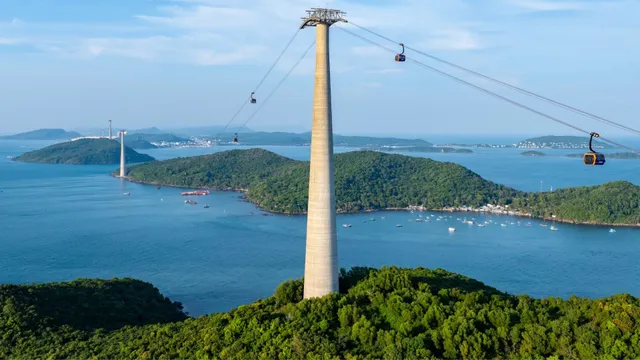
7-Day Vietnam Itinerary: Hanoi to Ho Chi Minh City
Vietnam stretches more than 1,650 kilometers from its northernmost tip to its southern edge — and covering that distance in seven days is not just possible, it's one of the most rewarding ways to understand how dramatically this country shifts in character, cuisine, and climate. From the ancient streets of Hanoi's Old Quarter to the restless energy of Ho Chi Minh City's District 1, the north-to-south itinerary has become the defining journey for first-time visitors and returning travelers alike.
The challenge is not finding things to do. It's choosing what to leave out. Vietnam's central coast alone — Hue, Da Nang, Hoi An — could easily fill an entire week by itself. A seven-day frame forces you to make clear decisions: which landscapes matter most, how much time to spend in cities versus countryside, and whether the priority is speed or depth. This guide is built around that constraint, selecting stops that offer the highest return on limited time while keeping travel fatigue manageable.
What follows is a day-by-day lịch trình 7 ngày designed for travelers flying into Hanoi and out of Sài Gòn, combining domestic flights with short overland journeys to keep pace without sacrificing the soul of each destination.
Day 1–2: Hanoi — Where History Moves at Walking Pace

Landing in Hanoi, the first instinct for most travelers is to orient themselves around Hoan Kiem Lake — and that instinct is correct. The lake sits at the intersection of the Old Quarter to the north and the French Quarter to the south, making it the natural anchor for two full days on foot.
Spend Day 1 entirely inside the 36 streets of the Old Quarter. Each street historically specialized in a single trade — Hang Bac (silver), Hang Gai (silk), Hang Ma (paper votives) — and while that specialization has blurred over centuries, the layered architecture and alley culture remain intact. Lunch at a pho shop on Bat Dan Street, where the broth has been slow-cooked since early morning, costs around 40,000–60,000 VND and will reset any expectations about what pho actually tastes like. In the late afternoon, walk to the Temple of Literature, Vietnam's first national university founded in 1070, which gives the city's intellectual history a physical address.
Day 2 is better spent crossing to the western side of the city. The Ho Chi Minh Mausoleum complex (open Tuesday to Thursday and Saturday to Sunday, mornings only) requires patience — queues form early — but the surrounding Ba Dinh Square and the stilted house where Ho Chi Minh lived from 1958 to 1969 are genuinely moving in their simplicity. End the evening on Ta Hien Street, where corner tables and cold Hanoi Beer have turned a single block into one of the most sociable spots in the city after dark.
Day 3: Ha Long Bay — One Night Is Enough If You Choose Wisely
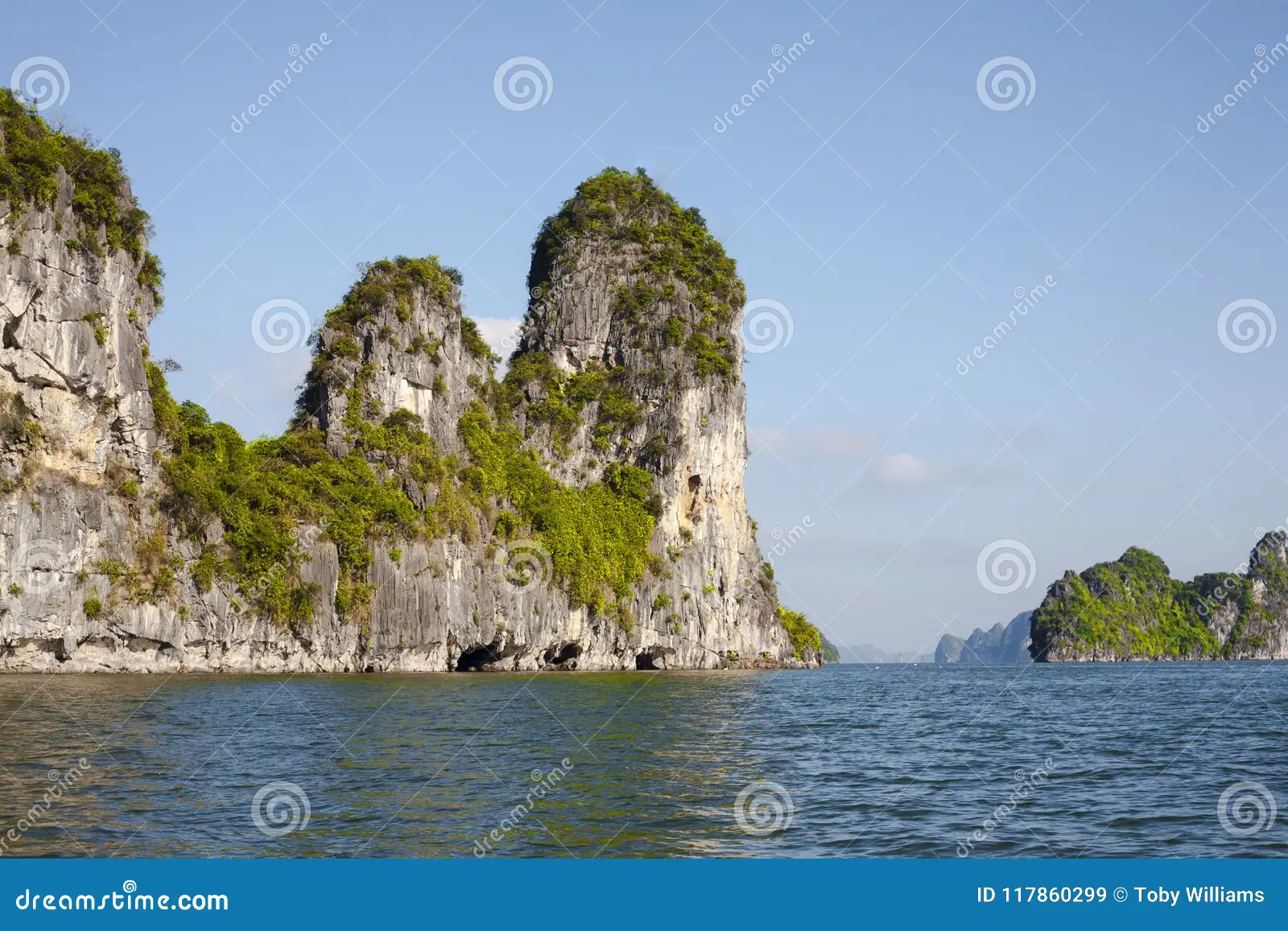
The round trip from Hanoi to Ha Long Bay by road takes roughly 3.5 to 4 hours each way, which is why the standard recommendation — and the most practical one — is an overnight cruise rather than a day trip. Departing Hanoi by shuttle bus around 8:00 AM, most cruises board at noon and return to port by 11:00 AM the following morning, giving you a full afternoon and evening on the water among Ha Long's 1,969 limestone islands.
The quality gap between budget and mid-range cruises is significant here. Vessels in the 3-star category (typically 2,500,000–4,500,000 VND per person for an overnight) include kayaking, cave visits to places like Thien Cung or Sung Sot, and a seafood dinner on deck. The extra spend is worth it for the quieter routes that bypass the more congested channels near Cat Ba Island. Operators like Paradise Cruises and Bhaya Cruises have established reputations for separating their itineraries from the midday traffic.
If budget is genuinely tight, consider Lan Ha Bay instead — adjacent to Ha Long, administered under Cat Ba Island, and significantly less crowded. The scenery is comparable, the price is lower, and the fishing village atmosphere feels more authentic.
Day 4: Hue — The Imperial City That Takes Half a Day to Absorb
The flight from Hanoi to Da Nang takes approximately 1 hour 15 minutes and costs between 800,000–2,200,000 VND depending on how far in advance it's booked. From Da Nang airport, a taxi or grab to Hue takes around 2 hours along the coastal highway — a drive that crosses the Hai Van Pass, one of the most spectacular stretches of road in Southeast Asia, before descending into the Perfume River valley.
Hue was Vietnam's imperial capital from 1802 to 1945, and the Nguyen Dynasty's Citadel — a UNESCO World Heritage Site since 1993 — dominates the north bank of the Perfume River. The outer walls enclose the Imperial City, and within that, the Forbidden Purple City where the emperors lived. Much of the complex was damaged during the Tet Offensive in 1968 and later fighting, so what visitors see today is a careful reconstruction alongside authentic ruins. The royal tombs of Minh Mang and Tu Duc, located 6–12 kilometers south of the city center, are architecturally distinct from one another and worth the short motorbike ride if time allows.
Dinner in Hue means bun bo Hue — a lemongrass and shrimp paste broth with thick rice noodles that is categorically different from Hanoi pho in its spice level and fermented flavors. The version served at street stalls near the Dong Ba Market, priced around 35,000–50,000 VND, is reliable and fills up quickly after 6:00 PM.
Day 5: Hoi An — The Town That Rewarded Slowing Down

Hoi An sits 30 kilometers south of Da Nang, a 45-minute drive or a scenic 40-minute ride by bicycle along the coast. The Ancient Town — also a UNESCO World Heritage Site — is compact enough to cover on foot in a morning, but the reason most travelers stay longer is the texture of daily life that reveals itself only when you slow down.
The Japanese Covered Bridge, the Chinese Assembly Halls, and the 200-year-old merchant houses are the standard circuit. What often goes unmentioned is the tailoring industry: Hoi An has over 400 tailoring shops, and a well-made silk dress or ao dai can be ready in 24–48 hours for 400,000–1,500,000 VND depending on fabric and complexity. First-time visitors frequently underestimate how much time this takes — factoring in measurements, fittings, and adjustments — so ordering on arrival and collecting before departure makes more logistical sense than leaving it to the last hour.
For lunch, white rose dumplings (banh bao vac) and cao lau — a regional noodle dish made with water drawn from a specific well in town, a claim locals make with complete seriousness — are the two dishes that cannot be replicated outside of Hoi An. Both are available along Tran Phu Street for under 60,000 VND.
Day 6: Da Nang — A City That Has Figured Out What It Wants to Be
Da Nang is often treated as a transit point between Hue and Hoi An, which does it a disservice. Vietnam's third-largest city has rebuilt its waterfront over the past decade into one of the most liveable urban stretches in the country, and a half-day here before the evening flight south is time well spent.
My Khe Beach — ranked by Forbes as one of the most beautiful beaches in Asia, stretching 33 kilometers along the coast — is walkable from most hotels in the Son Tra district. The Dragon Bridge, a 666-meter structure that breathes fire on weekend nights (20:00 and 21:00, Saturday and Sunday), has become the city's visual signature. Less visited but architecturally striking is the Marble Mountains complex, five marble and limestone hills containing Buddhist sanctuaries and cave temples, located 9 kilometers south of the city center.
Fly Da Nang to Ho Chi Minh City in the evening — this route typically costs 500,000–1,800,000 VND and takes 1 hour 20 minutes. Booking the later departure (around 19:00–20:00) allows a full afternoon in the city rather than rushing to the airport after lunch.
Day 7: Ho Chi Minh City — End the Journey Where Vietnam Looks Forward
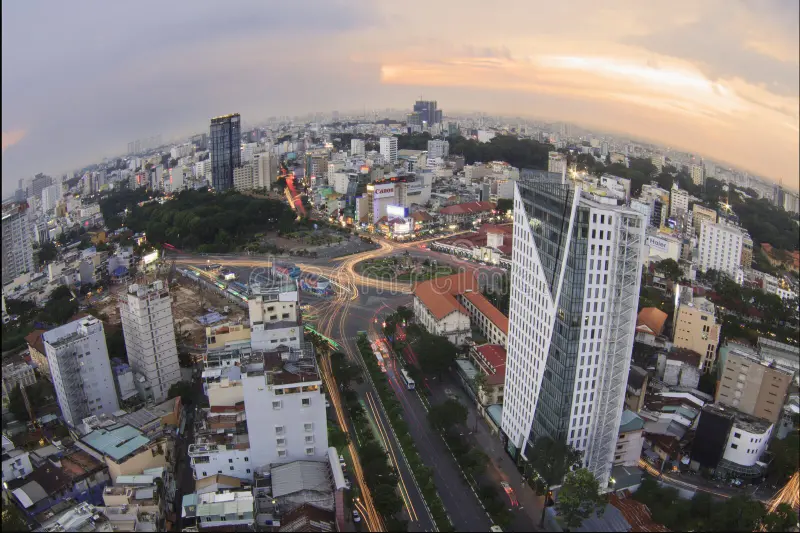
Arriving in Sài Gòn the night before and spending the final full day in the city is the more relaxed option, but even a single day here leaves a strong impression. Ho Chi Minh City does not have the layered historical texture of Hanoi — it moves differently, faster, louder, with a commercial confidence that the north rarely shows.
The War Remnants Museum in District 3 is factually detailed and emotionally demanding; two hours here is the right allocation, not more. The Reunification Palace — where North Vietnamese tanks rolled through the gates on April 30, 1975 — has been preserved almost exactly as it was on that day, down to the communications equipment in the basement war rooms. Both sites are within walking distance of each other and together form the most concentrated history lesson in the city.
District 1's Ben Thanh Market is worth a walk-through for context rather than shopping — the same goods are cheaper at the surrounding street stalls. For a final meal, the banh mi at Huynh Hoa on Le Thi Rieng Street, consistently cited as among the best in the city, costs 45,000 VND and is large enough to constitute a full lunch. The queue moves quickly despite its length.
End the seven-day lịch trình on the rooftop of Bitexco Financial Tower or a bar on Bui Vien Street, where Sài Gòn's nightlife compresses every age group and nationality into a few hundred meters of organized chaos. It is, in its own way, the perfect closing note for a journey that began in the quiet of Hanoi's dawn.
Practical Tips for a Smooth North-to-South Journey
Booking domestic flights early matters. Vietnam Airlines, VietJet Air, and Bamboo Airways all service the Hanoi–Da Nang and Da Nang–Ho Chi Minh City routes, with prices varying considerably by season and booking window. Booking 4–6 weeks in advance typically secures the best fares.
Pack for three climates. Hanoi in cooler months (November to March) can drop to 15°C at night. The central coast is transitional. Ho Chi Minh City sits in a humid tropical zone around 30–35°C year-round. Layering is practical; checking a bag adds flexibility.
Travel insurance covering medical evacuation is not optional. Vietnam's private hospital facilities in major cities are adequate for most situations, but anything requiring specialist care or surgery typically involves transfer to Bangkok or Singapore. Policies that include emergency evacuation coverage run around USD 50–100 for a two-week trip.
The Grab app (Southeast Asia's equivalent of Uber) works in all cities covered in this itinerary and is consistently cheaper and more reliable than negotiating taxi fares at tourist sites. Download before landing in Hanoi.
According to Viet Fun Travel, cross-Vietnam tour packages covering a similar north-to-south route over 8 days start at around 10,310,000 VND per person — a useful benchmark when comparing the cost of independent travel against organized tours, particularly for solo travelers where per-person costs tend to be higher.
Conclusion
A 7-day Vietnam itinerary from Hanoi to Ho Chi Minh City works best when it follows a clear logic: use flights to cover the distances that would otherwise eat the trip alive, choose one or two nights in the north for depth, move through the central coast quickly but deliberately, and arrive in the south with enough energy left to appreciate it. The three stops that earn their place on any version of this route — Ha Long Bay, Hoi An, and Sài Gòn — do so because they are genuinely irreplaceable, not because they appear on every list. Hue rewards travelers willing to do a little reading before they arrive; Da Nang rewards those who treat it as a destination rather than a layover.
The honest advice from anyone who has done this journey more than once: resist the urge to add more stops. Seven days and five cities is already a full schedule. The temptation to squeeze in Ninh Binh, Da Lat, or Mui Ne is understandable, but the trip that tries to cover everything usually remembers nothing. Choose your stops, go deep, and let the country reveal itself at its own pace.
Frequently Asked Questions
Is 7 days enough to travel from Hanoi to Ho Chi Minh City?
Seven days is sufficient if you use domestic flights between major stops rather than relying on trains or buses for the entire route. The key trade-off is breadth versus depth — a well-planned 7-day itinerary can cover Hanoi, Ha Long Bay, the central coast, and Ho Chi Minh City meaningfully, but leaves little room for spontaneous detours. Travelers with 10–14 days will have a noticeably richer experience, particularly in the central region.
What is the best time of year for a north-to-south Vietnam trip?
February to April is generally considered the most reliable window. Hanoi and the north are cool but sunny, the central coast has emerged from its wet season (which peaks October to December), and the south is in its dry season. Traveling in September or October means the risk of typhoons affecting Da Nang and Hoi An is real enough to affect plans.
Should I book an organized tour or travel independently?
Both approaches are viable. Organized cross-Vietnam tours from providers like Viet Fun Travel start at around 10,310,000 VND per person for an 8-day package and eliminate logistical stress — transport, accommodation, and most meals are handled. Independent travel typically costs less if you book flights in advance and stay in mid-range hotels, but requires more planning time. Solo travelers often find group tours more economical than going alone.
Can I do the Ha Long Bay cruise as a day trip from Hanoi to save time?
Day trips to Ha Long Bay exist and are offered by many operators, but they are not recommended. The 3.5–4 hour road journey each way means you spend roughly 7–8 hours traveling for only 3–4 hours on the water. An overnight cruise, by contrast, uses those travel hours for sleep and gives you a full afternoon, evening, and morning aboard — significantly better value in every respect.
How much does this 7-day itinerary cost on average?
Budget varies significantly by travel style. A rough estimate for independent mid-range travel: domestic flights (3 segments) at 3,000,000–6,000,000 VND, accommodation at 500,000–1,200,000 VND per night (7 nights), meals at 150,000–300,000 VND per day, entrance fees and activities at 500,000–1,000,000 VND total, and the Ha Long Bay cruise at 2,500,000–4,500,000 VND. Total: approximately 13,000,000–24,000,000 VND (USD 500–950) excluding international airfare.